Showing posts with label 19th century abolitionists. Show all posts

Friday, January 29, 2010

French Abolition Memorial Begins Construction

19th century French abolitionist Senator Victor Schoelcher is indirectly in the news this week, as France's city of Nantes is undertaking the construction of a large memorial near a pedestrian footbridge named in his honor.

The memorial is not dedicated to senator Schoelcher per se, but rather to the 1848 abolition of slavery in France's colonies, the movement he played such a large role in bringing to fruition.

There will be two parts to the abolition memorial; one, an esplanade walkway along the Loire river, several miles long, aligned with 2,000 stones, each bearing the name of a French ship that had participated in the Trans-Atlantic slave trade. The riverside trail will connect the forementioned Victor Schoelcher footbridge and the Anne-de-Bretagne bridge. A second, wooden pathway, described as a "meditative route", will be constructed on the slope just below the Quai de la Fosse.

This branch of the memorial has some controversy attached to it: significant work, at great cost, will have to be done to shore up the riverbank to secure the ground for the 426 foot pathway, in a section of the river prone to periodic flooding. Officials admit that it is likely that the expensive pathway will be submerged under water, and therefore closed to the public, several times a year.

The city says that a "closing protocol" is being established, where it will be someone's job every Monday morning to determined whether or not to leave open or to close the pathway to pedestrian traffic, depending on weather conditions and tidal predictions projected for that week.

The entire memorial project is expected to be completed in 2011.

[Translated from an article in the French online newspaper Press Ocean]

It's great to recognize historical events that remind us of our ability to change for the better, as from such signs we may find encouragement that such progress may continue in our own time, through our own efforts.
But: one can't help wishing that more of that money might instead be directed towards curbing slavery in modern-day France instead...
[image of the Pont Anne-de-Bretagne and my best guess for where the memorial project will be built, courtesy of Googlemaps]

Tuesday, January 12, 2010

US Abolitionists: 19th Century Bloggers

When I first found and started to read the early 19th Century abolitionist newspapers of Benjamin Lundy ("The Genuis Of Universal Emancipation"), and William Lloyd Garrison's "The Abolitionist", I was struck by how much these 1820s and 1830s weekly and monthly journals felt like our modern-day blogs.

The formats are remarkably similar: Lundy and Garrison collected stories from regional (and occasionally, international) newspapers that related to their journals' themes, acting more as editors than reporters, much as bloggers do today (It was part of the "rules of the game" that editors shared their newspapers with each other through mailed subscriptions, and that proper credit would be given when one editor would reprint a story originally appearing in another's journal, exactly how linked stories are handled today); readers wrote in with their comments and observations, and their letters in turn were commented upon by the editor; meetings were "live-blogged" by having their minutes published in subsequent journal entries...
It seems the urge to blog on a theme of personal interest is "something old made new again".

I see that I'm not the first to make this observation; I'm in the middle of reading Merton L. Dillon's 1974 book, "Abolitionists: The Growth Of A Dissenting Minority", and while searching this morning for more information on the author, I came across this 2005 exchange between Professor Dillon and a former student of his, on the amazing resemblance between abolitionist journals and blogs.
Dillon compares the work of early abolionist writers to their modern-day counterparts, and perceptively concludes on a hopeful note that hadn't occured to me:

The problem, then, in an age lacking popular print or other conduits of information, was how to reach like-minded people. How can such people find each other? How can random and inchoate ideas be gathered from these sympathetic but disparate people and molded into an acceptable, rationally consistent program? Interchange of thought must be the process. What shall be the agency?

Beginning around 1820 small, shoestring newspapers began the process. [Benjamin] Lundy's [The Genius of Universal] Emancipation was one of the first and most long-lasting. Lundy sent his paper where he thought it might be welcomed. He printed exposes of the slave systen and proposed remedies. He invited readers to contribute their ideas. Later, [William Lloyd] Garrison did the same. The remedies were as varied as the critiques.

It took a while before antislavery advocates found each other and developed something like a community. It took still longer for them to forge a program. It is not ungenerous to conclude that, despite all their writing, all their speaking, all their conferring, they never were able to set forth a program for abolitionism that all opponents of slavery found acceptable, but they did create a society or community.
...
How do people find each other? Bloggers in quite systematic and lightning-speed fashion are taking advantage of the opportunities technology has given them to speed and share ideas and, potentially, to create societies all with a facility Abolitionists could not have dreamed of.

Friday, December 25, 2009

Holy Night: "Chains Shall He Break..."

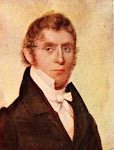
John Sullivan Dwight (1813-1893): Unitarian minister, Transcendalist, music critic,
abolitionist.

Here's a fresh look at a piece of wondrous, classic Christmas music:
O Holy Night.

Originally a french composition by Placide Cappeau, it was translated into english in by a man who shared the frenchman's deep-rooted abolitionist sentiments. As far back as 1837 Dwight had been preaching against slavery, delivering sermons on the great evil in-between more tranquil moments spent translating poetry by Goethe and Schiller. And there was music, always music: Dwight went on to publish, for four decades, the influential Journal Of Music: A Paper On Art And Literature.

In 1855 he is said to have first published his translation of Cappeau's French piece, "Minuit, Chretiens" ["Midnight, Christians"]. Today, we stop short from singing the piece in its original form... even though the Christmas wish expressed in its second half still applies in our time:

O holy night! The stars are brightly shining,
It is the night of Our dear Saviour's birth.
Long lay the world In sin and error pining,
'Til He appear'd And the soul felt its worth.
A thrill of hope The weary world rejoices,
For yonder breaks A new and glorious morn.

Fall on your knees! O, hear the angels' voices!
O night divine, O night when Christ was born;
O night divine, O night, O night Divine.

Led by the light of Faith serenely beaming,
With glowing hearts By His cradle we stand.
So led by light of A star sweetly gleaming,
Here come the wise men From Orient land.
The King of Kings Lay thus in lowly manger;
In all our trials Born to be our friend.

He knows our need, To our weakness is no stranger,
Behold your King! Before Him lowly bend!
Behold your King, Before Him lowly bend!

He taught us To love one another;
His law is love And His gospel is peace.
Chains shall He break For the slave is our brother;
And in His name All oppression shall cease.
Sweet hymns of joy In grateful chorus raise we,
Let all within us Praise His holy name.


Christ is the Lord! O praise His Name forever,
His power and glory Evermore proclaim.