“I had lamented the sad condition of the slave, ever since I became acquainted with his wrongs and sufferings. But the question, ‘What can I do?’, was the continual response to the impulses of my heart. As I enjoyed no peace of mind, however, I at length concluded that I mustact...” ___Benjamin Lundy
It was a shock to discover the awful news that there are more slaves alive today, in our "civilized" time, than ever before. (Wasn't slavery supposed to be "abolished"?)
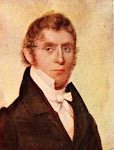
When I read the journal of American abolitionist Benjamin Lundy, it inspired me to action. Lundy’s hard early life cost him most of his hearing, but he never forgot the shameful sound of the chains of slavery.
Slavery stains every place in every time, kept alive by our indifference as much as by our sinful nature. Is the human race so fallen that we dare not dream of a day when slavery has been truly, wholly abolished? What we can try to do to break the chains of the eternal evil of slavery, today?
There's a good reason for readers of this blog to pay attention to the Academy Awards this year, at least the short film category: one of the nominees for Best Live Action Short Film is KARI, a 17-minute offering by writer-director-producer Gregg Helvey on modern-day slavery in India.
At the film's official website, Helvey reveals some behind-the-scenes information on the origin of the project, and the the two-and-a-half years' work that went in to its creation:
After I graduated from the University of Virginia in 2001, I had a brief stint as a National Geographic Traveler, where I first learned that slavery still exists. The editor I was working for was starting a nonprofit targeting sex slavery in Eastern Europe. It blew my mind to hear the horrific stories of young women being sold into slavery. As I dug into research, I learned that the most prevalent yet least-known form of modern-day slavery is bonded labor. The majority of films I had seen exposed sex slavery and human trafficking, but there are very little on bonded labor. I read about some brick kilns in India and Pakistan where entire families are forced to make bricks in order to pay off “loans” they are tricked into taking. The slaves are forced to work through intimidation or violence and, if they attempt to escape, they are often beaten and then charged for the price of their bandages. If they do escape, then the loan givers will force extended family members to work in their relative’s stead. Often, the victims are both illiterate and innumerate, thus making it difficult to fully understand their own situation. These bogus loans can be passed down through generations, resulting in families who have only ever known a life of forced labor.
Hopefully, even if it doesn't win, the very nomination and mention during the high-profile Academy Awards will ensure greater exposure of the film, and especially of its subject matter.
(What, I wonder, does it say about our 500+ cable channel culture, that short films, Academy Award-nominated or otherwise, have so little market that they must make the rounds of film festivals in search of their audience?)
A big vote of thanks to the persevering Gregg Helvey for his work in bringing attention to the evil of modern-day slavery.
For more background on the cruelty of South-Asia's back-breaking brick-making industry, see this 2007 report by the New York Times.
For a recent story on the desperate measures kiln-workers in neighboring Pakistan are resorting to in order to escape the brick-making industry, read this harrowing report from last December.
Haiti was last in the news a month ago, as many media organizations carried stories on the tragedy of that island's high number of child slaves: as many as 300,000 of Haiti's 2 million children are believed to be enslaved as household servants... and worse. Now the beleaguered nation is back in the headlines, with news of the dreadful earthquake that struck near the capital, Port-au-Prince.
Child slaves in Haiti are called Restaveks (derived from the French "reste avec", or "stay with"), and a majority of Haiti's enslaved children were being kept as property by wealthier Haitians in the areas hardest hit by the earthquake. About a third of the island's total population were living near the epicenter of the quake.
Many of the schools, medical centers, orphanages and other shelters painstakenly created for Haiti's rescued child slaves, seem to have been damaged when not destroyed, and now must be rebuilt.
There are many videos and interviews with former and current restaveksonline, and this week we watch them with new eyes as we wonder about the fate of those testifying to the hell on earth existence they had to live with even before the added tragedy imposed by the earthquake. Will the aftermath of this week's aftershocks send them back into chains, or is this the hammer blow that can bring freedom to Haiti's slaves, once and for all?
Godspeed to them in their time of need, God Bless those working so selflessly to assist them through these dark days, may we all do as we can to help ensure that a ray of light will emerge out of the cloud of darkness that has descended over the island of Haiti.
Looking for a ray of hope today, and found one in the story of Mark, a six-year old West African boy who finds himself freed from the chains of slavery, and the brutal half-life of servitude in a Ghana fishing village on the shores of Lake Volta.
Back in October 2006, the New York Times ran a news item on the diabolical relationship between poverty and slavery in modern-day Africa, how desperately hungry parents sell their own children into cruel bonded labor in order to lessen the burden on the rest of the family. A six-year old boy named Mark put a human face on the practice; he carried such a haunted look that one of the reporters said she was struck by how he never smiled.
And no wonder; these boys' young lives, dodging alligators, eels and entangled fishing nets, are the stuff of nightmares:
A dozen boys, interviewed in their canoes or as they sewed up ratty nets ashore, spoke of backbreaking toil, 100-hour workweeks and frequent beatings. They bore a pervasive fear of diving into the lake’s murky waters to free a tangled net, and never resurfacing. One 10-year-old said he was sometimes so exhausted that he fell asleep as he paddled. Asked when he rested, another boy paused from his net mending, seemingly confused. “This is what you see now,” he said. ... The children’s sole comfort seems to be the shared nature of their misery, a camaraderie of lost boys who have not seen their families in years, have no say in their fate and, in some cases, were lured by false promises of schooling or a quick homecoming.
Working with a small Ghanaian charity, Mrs. Cope paid $3,600 to free the children and found them a new home in an orphanage near Accra, the capital. After years of privation, the children were dumbstruck by the plentiful breakfast served at the orphanage, caregivers there said. ... Few of the children had had any schooling. All now attend school. When Mrs. Cope visited in January, she found Mark Kwadwo a transformed child — reveling in piggyback rides, spaghetti and his new school uniform. “To hear him giggle,” she wrote by e-mail, “was priceless.”
“Jason began reading it, and every couple of pages he was saying, ‘Oh, my God, Jen, listen to this!’ He read it in 24 hours,” Jennifer said. “I read it within the next 24 hours.” ... “After we read the book, it wasn’t ‘should we go to Ghana?’ It was ‘when are we going to Ghana?’” Jennifer said. ... In August the Hackmanns boarded a plane in New York and flew to Accra, the capital of Ghana, with 37 other Touch A Life volunteers, who paid their own way....
Touch A Life works with George Achibra, a Ghanaian who has worked since 2000 to free children there. Volunteers work at freeing the children, yet they offer the masters no money. Paying for the release of children likely would provide more incentive to continue the practice and make slavery there more lucrative. “When you are negotiating the release of one of the children, you are doing it by making them feel bad,” Jennifer said. “You guilt them into it.” ... So far, 69 children have been rescued, Newton said. Those include three children, ages 9 to 11, that Jason and the others helped free on their trip. “One of the kids had been a slave since he was four years old,” Jason said. “I thought that kid would never smile again. He had the look of hopelessness. Two days after we rescued him, he had a smile on his face and he is happy.” The children are not reunited with their parents, for fear they would be sold again, but live and are educated at two village camps, depending on their age. Jennifer is back in Ghana this week and called Jason at his office Nov. 17. While they were on the phone, Teeteh, one of the boys Jason helped rescue, came up to her and asked, “Is that my father who rescued me?” Touch A Life, which has an annual operating budget approaching $400,000, works not only to rescue children but also to make them self sufficient through strategies such as micro-financing, providing them with small loans to start businesses. “We work with Ghanaians in the country who know what they need,” Newton said. The foundation has been funded solely through donations, though it is preparing to apply for its first government grant, Newton said. Another effort is to convert the fishermen to what is called sustainable aqua-culture, basically fish farms, using cages and ponds. “You get a better product, and you don’t have to use child labor,” Newton said. As for the Hackmanns, they said they have made a commitment to see this through. “People think, ‘Africa? It’s hopeless.’” Jason said.
“But this is 7,000 kids, not 7 million. This can be done.”
The boy's father had been searching for his missing boy for weeks, having learned that a fellow villager had trafficked the child to India's capital city, Delhi. Having come so close, he was still far from finding, and rescuing, his son, as the local bureaucracy paid little attention to his pleas for assistance, sending him on a fruitless merry-go-round of visits to police station after police station. It's hard to imagine the degree of despair and grief that must have afflicted the father at this time; even after receiving a tip on the restaurant holding his son captive, he was not able to melt the government's icebound bureaucratic indifference. His son remained in chains.
Thankfully, the case came to the attention of the Bachpan Bachao Andolan (BBA) ["Save The Childhood Movement"], a private Indian organization dedicated to freeing India's children from bonded labor. The BBA have rescued over 70,000 children from slavery since the group's founding in the 1980s. Their experience allowed them to navigate the sea of red tape and got the father's complaint filed with the appropriate child labor agency, resulting in a rescue operation mounted against the restaurant and its heartless owner.
“I was working in this Dhaba for last 3 months. One day, he accused me of stealing Rs. 50,000 from his home and started torturing me physically. A fortnight ago, he decided to tether me with iron chains. I could move in the radius of one metre only and worked for more than 15 hours a day without any protection from the cold weather. Police personnel kept coming to the Dhaba and mocked at me. There is a mosque just opposite, even the people saw me like this everyday after their morning and evening prayers. Nobody came for my rescue”.
BBA's Chairperson, Professor Rama Shankar Chaurasia, draws a sobering conclusion from the child's rescue:
“A child found chained in the heart of national capital is a serious issue. It goes on to show how little concern we have for children of our society..."
It staggers the imagination to think that police officers in India's capital city can see a child wearing these shackles, and their reaction is... to mock him??
[Image courtesy of BBA's news report on the story]
 At the film's official website, Helvey reveals some behind-the-scenes information on the origin of the project, and the the two-and-a-half years' work that went in to its creation:


