Showing posts with label Benjamin Lundy. Show all posts

Tuesday, January 26, 2010

Two Lessons

While reading Reverend Parker's 1883 history of the American abolitionist movement, "Acts of the Anti-Slavery Apostles" this week, I came across an arresting quote:
When some discerning Romans saw how many statues were reared in their city to persons of only indifferent merit, while Cato, one of their wisest and best, had none, they wondered. But the great man had answered the question beforehand:
"Better that posterity should ask why Cato has not a monument, than why he has."
That anecdote seemed to put into focus some half-formed ideas I had been thinking about, on what I've learned since I started blogging about the scourge of modern-day slavery. From all the reading and researching, come two lessons learned.

Lesson One: The numbers involved are no longer quite so abstract.

The daily deluge of news stories that Google Alerts sends into my mailbox has made me much more able to visualize the mathematical abstraction of the number 27,000,000. (That's the calculated number of human beings undergoing various forms of enslaved labor, today, right now.)

It's a staggering total, but I think its true horror is hidden by our inability to comprehend such figures in concrete forms. It's a number outside of our experience. We've been in crowds of dozens of people at parties, so that's a number we "see" quite clearly. Same with hundreds, or thousands, even tens of thousands; we've all been to theaters, churches and sports stadiums, so larger numbers like these are within reach of our imagination. But "millions"? What does a "million people" look like? It's inconceivable.

If you point to my neighbor's lawn, and tell me that there are 7 million blades of grass contained within it, but quickly confess that you were only kidding, that in truth the number was actually almost four times that amount, at 27 million... I'd be unable to feel deceived: I simply can't put a mental picture to such numbers. You might as well have said there were 27 billion blades of grass on that lawn. It's an abstraction that has no shape.

Well, after two months' worth of daily deposits of stories of modern day slavery, from all around the world, such previously unimaginable numbers start to take clear shape indeed. When every day's revelations include stories of 3 teenage sex slaves found in Texas, 54 Burmese laborers rescued in Thailand, 200 children liberated in India, and more, these numbers add up over time like a crowd emerging out of a fog, until the immensity of a number like one million starts to assume a ghastly form.

When one is too many, when twenty is monstrous, the sound of millions of chains is deafening. May the day soon come when this sound is heard by more, by all, so that by our numbers we can gather the will and the strength to break these chains.

Lesson two has to do with another number: the delightful surprise in discovering the incredible number of heroes who succeed in rescuing men, women and children from enslavement on a daily basis.

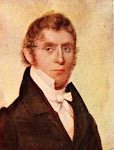
As it says in my blog's sidebar, it was through reading the journals of obscure 1820s-'30s abolitionist Benjamin Lundy that I was motivated to start chronicling the various stories I was finding online about the scope of modern-day slavery. Lundy's was a solo voice when he began his abolitionist work, not one in a choir; Lundy's journey started off as a solitary walk, not marching at the front of a crowd; yet he persevered on, despite the unimaginable odds stacked against him.

How much less hopeless things must be today! I had no idea that there are so many heroes who toil day after day to identify, to rescue, and to help, those slaves shackled to modern-day chains. (Please visit them in my "Breaking The Chains Today" link section in the sidebar!)

Friend Lundy had to stand in opposition to his own government, in addition to the slave-owners and slave-traders; his mission placed him against his own society. Today, in theory, there are no nations that still legalize slavery. The slave traders are criminals, not businessmen. The odds are on our side, that an end can be conceived, a day can now come that the chains of slavery may be somehow broken, and that all may taste freedom. The victories of today's abolitionists need to be heard, if we are to find the most valuable resource needed in the fight against slavery: hope. The hope that this second lesson brings almost balances out the despair brought by the first.

It's been the greatest surprise I've received since I began my research, because these heroes tend to be just as hidden to our eyes as the evil they fight against. Why is such goodness kept such a secret?

Where are the honors, for example, for the wonderful team of doctors led by Dr. Jeff Barrows who are headed to Nicaragua to care for the rescued former prostitutes sheltered at the House Of Hope?

Where are the medals for heroes like Charlotte Salasky for her work in helping rescued sex slaves in Cambodian shelters organized by the Somaly Mam Foundation, as they provide medical attention and vocational training for their young charges?

Where are the red carpets for the Australian former police officer whose quick-thinking rescued a 10-year old and 14-year old Vietnamese girl from the nightmare of sexual exploitation?

Where are their monuments?

In the smiles of those they've served, that's where; smiles animated by the previously unimagined possibility of better tomorrows.

Tuesday, January 12, 2010

US Abolitionists: 19th Century Bloggers

When I first found and started to read the early 19th Century abolitionist newspapers of Benjamin Lundy ("The Genuis Of Universal Emancipation"), and William Lloyd Garrison's "The Abolitionist", I was struck by how much these 1820s and 1830s weekly and monthly journals felt like our modern-day blogs.

The formats are remarkably similar: Lundy and Garrison collected stories from regional (and occasionally, international) newspapers that related to their journals' themes, acting more as editors than reporters, much as bloggers do today (It was part of the "rules of the game" that editors shared their newspapers with each other through mailed subscriptions, and that proper credit would be given when one editor would reprint a story originally appearing in another's journal, exactly how linked stories are handled today); readers wrote in with their comments and observations, and their letters in turn were commented upon by the editor; meetings were "live-blogged" by having their minutes published in subsequent journal entries...
It seems the urge to blog on a theme of personal interest is "something old made new again".

I see that I'm not the first to make this observation; I'm in the middle of reading Merton L. Dillon's 1974 book, "Abolitionists: The Growth Of A Dissenting Minority", and while searching this morning for more information on the author, I came across this 2005 exchange between Professor Dillon and a former student of his, on the amazing resemblance between abolitionist journals and blogs.
Dillon compares the work of early abolionist writers to their modern-day counterparts, and perceptively concludes on a hopeful note that hadn't occured to me:

The problem, then, in an age lacking popular print or other conduits of information, was how to reach like-minded people. How can such people find each other? How can random and inchoate ideas be gathered from these sympathetic but disparate people and molded into an acceptable, rationally consistent program? Interchange of thought must be the process. What shall be the agency?

Beginning around 1820 small, shoestring newspapers began the process. [Benjamin] Lundy's [The Genius of Universal] Emancipation was one of the first and most long-lasting. Lundy sent his paper where he thought it might be welcomed. He printed exposes of the slave systen and proposed remedies. He invited readers to contribute their ideas. Later, [William Lloyd] Garrison did the same. The remedies were as varied as the critiques.

It took a while before antislavery advocates found each other and developed something like a community. It took still longer for them to forge a program. It is not ungenerous to conclude that, despite all their writing, all their speaking, all their conferring, they never were able to set forth a program for abolitionism that all opponents of slavery found acceptable, but they did create a society or community.
...
How do people find each other? Bloggers in quite systematic and lightning-speed fashion are taking advantage of the opportunities technology has given them to speed and share ideas and, potentially, to create societies all with a facility Abolitionists could not have dreamed of.

Tuesday, December 15, 2009

Hearing The Chains

“I had lamented the sad condition of the slave, ever since I became acquainted with his wrongs and sufferings. But the question, ‘What can I do?’, was the continual response to the impulses of my heart. As I enjoyed no peace of mind, however, I at length concluded that I must act...” ___Benjamin Lundy

It was a shock to discover the awful news that there are more slaves alive today, in our "civilized" time, than ever before. After all, wasn't slavery supposed to be "abolished"?

Slavery seems a universal, and eternal, sin, staining every place in every time. It is disappointing, and profoundly dis-illusioning, to learn how prevalently it stains our modern, "enlightened", age.

Is there anything that can be done to actually abolish slavery? What can one person do, in the face of a world paralyzed by pessimism almost as much as by indifference?

When I read the journal of early American abolitionist Benjamin Lundy, it inspired me to action. To paraphrase his philosophy: I don't know what I can do, all I know is that I must try to do something.

Lundy’s hard early life cost him most of his hearing, but he never forgot the shameful sound of the chains of slavery. And that sound motivated him to devote his life to the noble cause of abolition.

What an amazing man! His life saw hardship piled upon hardship, weakening his frail, under-sized figure; tragedy followed tragedy, culminating with his wife dying in childbirth while he was away on one of many fact-finding trips connected with his dream of universal emancipation. Yet, through it all, he never lost hope. He persevered, inspiring others to carry his singular candle, to follow in his solitary footsteps. To share his dream.

The abolition of slavery must have seemed an impossible goal in Lundy's time; despite all our modern resources, despite the great multitude of modern-day abolitionists, the goal still seems elusive, today. So: what can we do about it?

We can start as Benjamin Lundy started: we can start by hearing the chains of slavery.